
The Computer Newsletter
The March 2024 edition focuses on the interview with NACOSS's new President and insights on remote working.

There was an error in the edition we sent minutes ago; please discard it. Thank you.
We were away for three months! 😭 We are sorry!
But since our last publication, a few good things have happened.
We entered a new year 😜
But more importantly, the Department of Computer Science and Engineering is now the FACULTY OF COMPUTER SCIENCE AND ENGINEERING!!! 💃🏼💃🏼
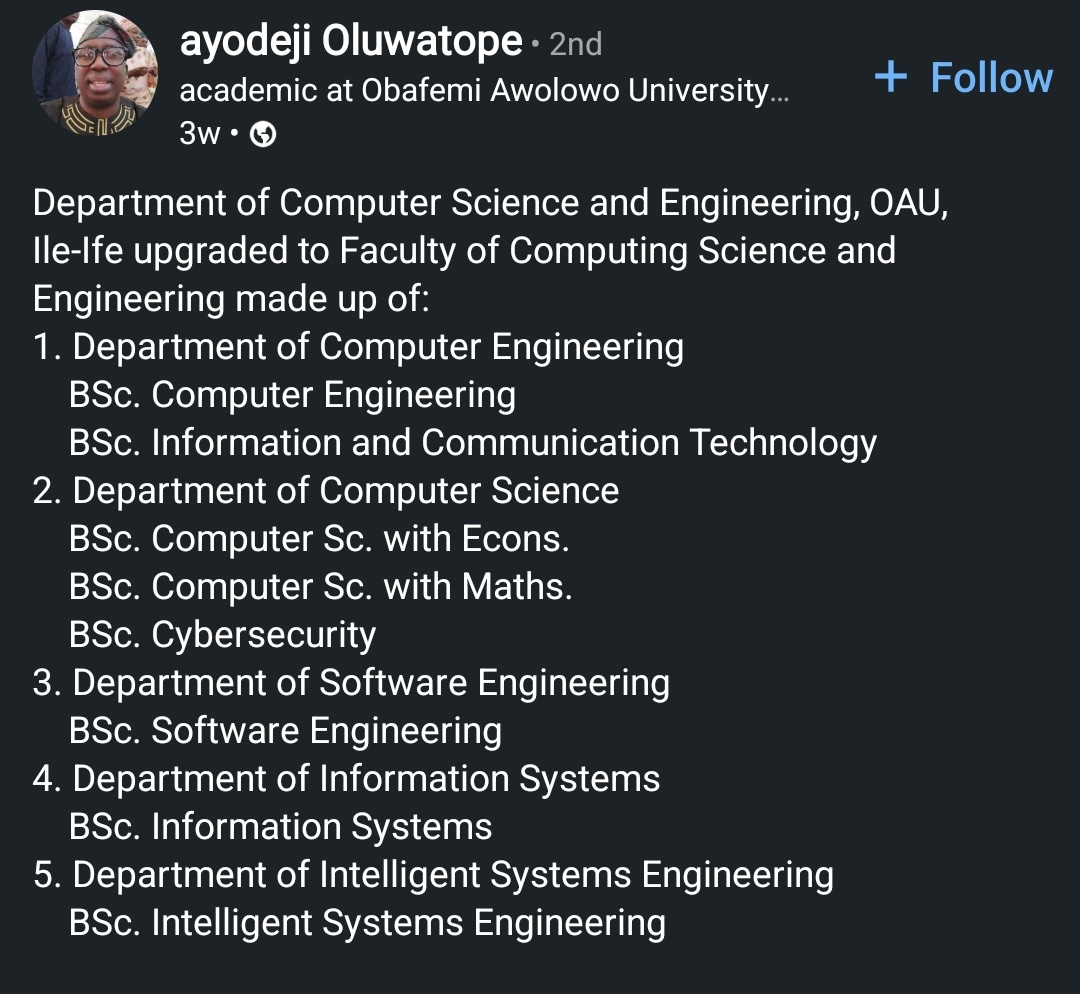
We will share how the department got here, the steps it took, and what to expect in the future in the coming editions.
Beyond that, two members of staff have recently been promoted. Professor B.O. Akinyemi and Dr. O.D Ninan as a reader.


Read about their profile here.
Now, to the agenda of this issue.
What’s Inside?
… Help Us Win Together - An Exclusive Interview with NACOSS President
Getting Started With Remote Work
Our doors are open to every NACOSS stakeholder; help us win together - Olaniran Olarotimi Ademola, NACOSS President.
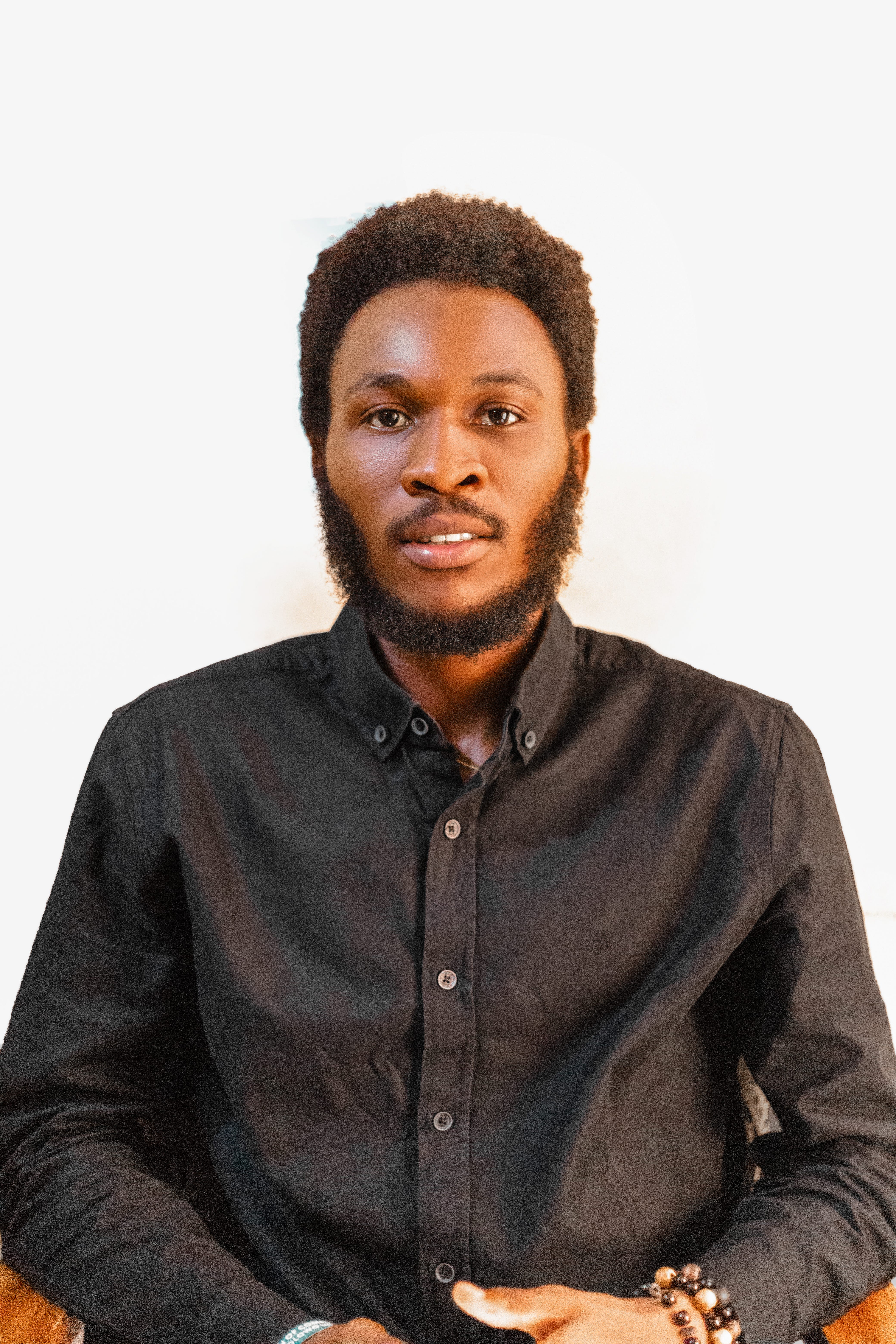
Interviewer: Please introduce yourself
NACOSS President: My name is Olaniran Olarotimi Ademola, popularly and politically known as Ola The Great OTG. I am a Part 5 student of Computer Engineering, Department of Computer Science and Engineering. I’m the elected President of the National Association of Computer Science Students (NACOSS), OAU Chapter.
I: What projects do you intend to implement as an administration, and how would these projects help students of the association?
NP: Since my part 3 days when I was the association's Vice President, I noticed how the association itself and the student body could be improved. One of such ways is capacity building - having a hub where students learn real industry demands in terms of skills. One of our programs will be on building our students with skills that will be needed when they graduate.
So, we are planning on inaugurating an innovation hub. Although it once existed in the past, about 4 or 5 years now. We are trying to bring that back so students learn about graphics design, software development and hardware designs, data science, and artificial intelligence.
We are trying to tap into the resources of quality students that we have who are already doing well in the space, especially those who are already working for companies - both local and international brands. We want to have those resources as mentors to guide students on these skill sets.
It will be a free hub we can call our own because we want our members to have a sense of belonging with the hub.
The hub will also help students get work and internship opportunities as we plan to reach out to companies that are open to such arrangements. We also foresee the hub as a leveller so any association member can enjoy the benefits with zero financial commitments.
The good thing is that we are not only planning to implement my ideas. I’m working with a team that also has electoral promises, and our goal is to serve the association. I know, for instance, that the financial secretary is planning an economic summit to educate students on how money works.
We are also open to ideas from any member of the association. Any students can walk into our office and give ideas on how we can improve the well-being of the students or make the association better.
I: You mentioned that a past administration has had some kind of hub in the past. What are the challenges you foresee, and how will you overcome them?
NP: One major challenge to any idea is finance. And with finance, you must be clear about what you intend to achieve. We plan to contact alums, some of whom we are already in contact with, for help.
We also intend to reach out to lecturers as a body to get their support. They are a link between the academic world and the tech industry, and any help we could get from them would be greatly appreciated.
Another challenge is continuity. A typical example is the innovation hub in the past. It stopped then because the team working on the hub graduated, and no one was around to continue. We plan to bring in part 2 and part 3 students as core members of the new hub so that they can continue when we leave.
I: How do you plan to engage students in your activities? Your doors are open, but how do you encourage them to come in?
NP: We are planning to leverage personal relationships with students. For instance, I don’t use this office often. I prefer to sit with students to listen and understand them on a personal level, and from there, we can further encourage them to tap into the resources and activities we have ready for them.
That will also help get them to talk to us about their view of the administration and how we can improve and serve them better.
Our executive members are also spread across the whole level, so you can say that they represent their class at the association level. And since we started, we have been getting feedback from students.
I: When did you resume office?
NP: January 17th, 2024. Still new
I: That means if I ask what is one thing you find surprising since you resumed office, you wouldn’t have an answer yet.
NP: I’m not sure there is any, to be honest. The reason is that I’m not new to the political space. I once served as the vice president in part 3 and later became the association's acting president.
So, even though I’m newly elected, I have served in this capacity in the past, even though not as an elected personnel.
I: What’s your thought on the conflict between academic excellence and gaining tech skills? Should one suffer for the other?
NP: No, you shouldn’t focus on one and leave the other. The truth, however, is that it is hard to balance the two. What is possible, however, is to be very good in programming, for instance, and still have a fair academic result. And if it is the other way round, that is encouraged.
The world is changing, and you can’t let one suffer. You are first a student; you should focus on getting it right. But because you also have the opportunity to learn tech skills, you should also take that seriously. Some would say school is a scam, but it isn’t.
I: You want to help students with tech through The Hub. Do you have similar plans for their academics?
NP: Yes. It is a duty as an administration we don’t take lightly at all. The Vice President is the head of the Academic team, and she plans to organize crash classes for students from time to time, especially for new students.
Aside from that, we also hope that we can encourage bright students in each class to teach their colleagues. With this in place, the association can only help minimally.

I: Now that the department is now a faculty, what plans do you have as an administration?
NP: We all know that the Department of Computer Science and Engineering is now a faculty. And one thing I would like everybody - students, lecturers, and other stakeholders - to come on board and help actualize the goal for which the faculty is being established.
We had a productive meeting with the HOD recently, and I’m happy that most of his plans and actions are student-centric.
So, the first thing is for us to see this for all of us and take this new beginning well. While we were not in the decision-making room, we are open to working together with other stakeholders to fly the flag of the faculty high.
My only plea is that the students are carried along in the decision-making process so that we can all understand our roles and do them diligently.
I: What final message do you have for students, lecturers, and other stakeholders regarding what they can expect from your administration?
NP: It’s a mutual ecosystem. In the same way, we have to perform; we also need their cooperation and assistance. Essentially, I would like them to see us as their personal projects. As students, our lecturers and alums are people we want to look up to, and we want them to be proud of us.
That means even when we haven’t done so well, we want any of them to reach out to us and let us know how we can do things better.
We plan to build a new NACOSS and governance. And so, while we have a short time here, we want to create a foundation and standard that incoming administrations can build on.
I: Thank you so much for your time. Do you have any other thing you want to add?
NP: Thank you as well. I want to advise the students that we are all in this together. The sad part is that if this administration failed, they would have failed, too. And the reason is that they would be denied the proper dividend the leadership would have provided.
So, we want them to come onboard, and let’s work together to get things right. This also applies to our lecturers; we want them to correct us in love and have them see us as a project so we can all take NACOSS to greater heights.
Read more in this March 2024 edition of The Computer Newsletter 🔻🔻
Getting Started With Remote Work
Brief profile of the new promotions